

Toll Free: (888) 218-2260
Phone: (570) 668-0320
Fax: (570) 668-5093
Email: sales@remalymfg.com
Toll Free: (888) 218-2260
Phone: (570) 668-0320
Fax: (570) 668-5093
Email: sales@remalymfg.com


CNC Press Brake Forming
Request Information
About Remaly CNC Press Brake Forming
Remaly Manufacturing has been in business since 1865 and is a leading provider of both custom metal fabricating and perforated metal services. We are committed to staying on the cutting edge in terms of technology, and we have recently upgraded our manufacturing capabilities to include top of the line CNC Press Brake forming capabilities. On top of this freshly added service we also have a number of other services that will cover virtually all your metal needs. Some areas where we excel include perforating, welding, bending, forming, and rolling; do not hesitate to call one of our sales representatives to see how we can help you with your next project.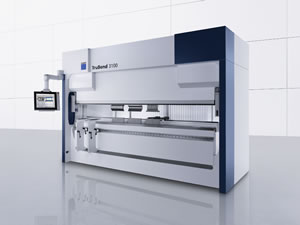
What is a Press Brake?
A press brake, also known as a brake press, is used for bending sheet metal and other materials into a desired shape. The specifications of a press brake are typically broken down into two main categories, force of the machine and the working length. The process involves placing the piece of sheet metal between two parts of the machine that are referred to as the punch and die. The die is in the shape of the desired end product and the punch forces the metal down into the die. The process bends the metal at the precise angle desired by using the right amount of force and correct punch and die combination.Performance Requirements in CNC Press Brake Forming
CNC press brake forming depends on precise force control, accurate axis movement, and consistent tooling alignment to produce repeatable bends across a wide range of materials and thicknesses. Modern equipment uses programmable backgauges, automated crowning, and multi axis control to maintain angle consistency along the full bend length. These capabilities reduce setup time, improve part uniformity, and support complex geometries that would be difficult to achieve with manual equipment. For manufacturers working with stainless steel, aluminum, carbon steel, or perforated materials, stable force distribution and accurate ram positioning are key contributors to predictable forming results.Material Behavior During Bending Operations
Different metals respond uniquely to bending forces based on yield strength, grain direction, and thickness. CNC press brakes allow operators to adjust tonnage, bend sequence, and tooling selection to accommodate these variations. High strength materials require controlled force application to avoid cracking or springback, while softer alloys benefit from consistent tooling surfaces that prevent marking. Automated crowning systems help compensate for deflection along the bed, ensuring uniform angles across long parts. These features support reliable forming for brackets, enclosures, panels, frames, and custom components used in industrial assemblies.Tooling Selection and Forming Accuracy
Tooling plays a major role in determining bend radius, angle accuracy, and edge quality. CNC press brakes support rapid tool changes, allowing operators to switch between punches and dies for different profiles or material types. Precision ground tooling helps maintain consistent contact surfaces, reducing variation from part to part. Multi axis backgauges position material accurately for repeatable bends, supporting complex sequences that involve multiple angles or tight tolerances. These capabilities help manufacturers produce parts that integrate cleanly into welded, fastened, or assembled structures.Process Efficiency and Production Flexibility
CNC press brake forming supports both prototype development and full scale production. Automated controls reduce manual adjustments, allowing operators to run short batches efficiently while maintaining accuracy across larger runs. Fast tool changes and programmable setups shorten lead times, making it easier to respond to design changes or urgent production needs. This flexibility is valuable for industries that require custom brackets, housings, guards, or structural components with consistent dimensional accuracy.Press Brake Forming FAQ
How Does CNC Control Improve Forming Accuracy?
Programmable axis movement, automated crowning, and precise backgauge positioning help maintain consistent bend angles and repeatable part geometry.Why Is Tooling Selection Important in Press Brake Forming?
Punch and die combinations determine bend radius, angle accuracy, and material flow, influencing both part quality and structural performance.What Factors Affect Material Behavior During Bending?
Yield strength, grain direction, thickness, and alloy type all influence how metal responds to forming forces and how much springback occurs.Can CNC Press Brake Forming Support Complex Part Designs?
Yes. Multi axis control and programmable sequences allow for intricate bend patterns, tight tolerances, and multi step press brake forming operations.Why Choose Remaly?
Our machine is a recent purchase 3100 CNC Press Brake from TRUMPF and it has a press force of 1000 kN (kilonewtons) and a bending length of 3060 mm (millimeters). Thanks to the advantages of this machine we are able to take on just about any press brake forming request. Its fast tool change feature and automatic tool clamping system make custom bending even easier, resulting in faster turnaround times for our customers. In fact, the 3100 CNC Press Brake has the highest axis-speed in its class.We are devoted to serving our customer’s needs, and this machine is the perfect fit for that commitment. Our service will allow us to test and develop application-specific solutions easily, that way we can try out different things to make sure that the product you end up with is a product that will fit your application and leave you satisfied. The quality of our press brake forming is at the top of the industry thanks to the high axis accuracy of the 3100 CNC Press Brake and the automatic crowning facility allows for constant bending angles over the entire bending length.
Remaly Manufacturing Company is dedicated to providing top of the line services and we have been for over 150 years. We are always working and striving to grow our business which is why we are constantly adding new custom services to our experience. Here at Remaly we know that our turnaround times are what separates us from our competition. This is why we are proud to say that our press brake forming will be no different, because we know that our customers expect our orders to ship, and ship accurately, within one week.
Remaly Manufacturing Company is a rapid response manufacturer of high quality perforated metals and custom fabrications, specializing in design and delivery of low volume orders or prototypes. Our capabilities include value added operations such as rolling, bending, shearing, welding and notching on both ferrous and non-ferrous metals. Design and drafting assistance are available. We also specialize in the unique requirements of acoustical applications, architectural concepts and artistic displays.
Remaly Manufacturing Company, Inc.
Toll Free: (888) 218-2260
Phone: (570) 668-0320
Fax: (570) 668-5093
Email: sales@remalymfg.com
Toll Free: (888) 218-2260
Phone: (570) 668-0320
Fax: (570) 668-5093
Email: sales@remalymfg.com
Privacy Policy Site Map
©
Remaly Manufacturing Company, Inc.,
All Rights Reserved
Site Design by IQS Directory®
 IQS Directory Trusted Partner